
Disclosure: Homestead Gardener is a participant in the Amazon Services LLC Associates Program. I earn from qualifying purchases. This means that if you click on a link and make a purchase, I may earn a small commission at no extra cost to you. Thank you for supporting Homestead Gardener!
If you are on a septic system, the laundry detergent you pour into your washing machine every week matters far more than most people realize. The wrong formula — even a popular, well-reviewed one — can slowly disrupt the delicate bacterial balance your septic tank depends on to function. And yet, most commercial detergents are formulated with exactly that kind of chemistry.
This septic-safe DIY laundry detergent is what I use on our homestead. It is made from four straightforward natural ingredients, costs a fraction of store-bought options, and — perhaps most importantly — actually cleans clothes. Not just rinses them. Actually cleans them.
Below you will find everything you need: the recipe, the science behind why it works, a real cost breakdown, tips for line-dried laundry, and answers to the questions I get asked most.
Why Make Your Own Laundry Detergent?
Making your own laundry detergent is one of the simplest and highest-return swaps you can make on a homestead. Once you have the ingredients on hand, a batch takes about ten minutes, costs less than four dollars, and yields over forty loads of laundry. That is less than nine cents a load.
The reasons people make this switch go beyond cost:
- You control every ingredient. No optical brighteners, synthetic fragrances, phosphates, or surfactants you cannot pronounce.
- It is genuinely septic safe. Every ingredient in this formula breaks down cleanly and does not harm your septic bacteria.
- It works. Washing soda — the backbone of this formula — is the same cleaner found in many commercial detergents. Paired with an oxygen stain booster, it handles real laundry.
- It is better for well water households. Without synthetic surfactants and builders that resist rinsing, this formula leaves far less residue in your water system.
Why Septic Safety Matters in a Laundry Detergent
A healthy septic system depends on billions of beneficial bacteria to break down household waste. Most people are careful about what goes down the kitchen drain — but laundry water accounts for a significant portion of total household water flowing into your tank every week, and the chemistry in that water matters.
Many common DIY laundry detergent recipes include borax. Borax is a naturally occurring mineral and an effective laundry booster — but it has natural antibacterial properties that, with repeated use over time, can reduce the bacterial activity in your septic tank. It is a slow problem, not an immediate one, but it is a real one.
This recipe deliberately excludes borax and replaces its functions with ingredients that accomplish the same jobs without the septic risk. The result is a formula that is safe for your system, safe for your soil if you irrigate, and safe for local waterways.
💧 Good to Know
White distilled vinegar, used as a rinse aid in this system, is actually beneficial for septic systems in the small amounts used per load. It is one of the most homestead-friendly cleaning agents available.

The 4 Ingredients — and What Each One Does
Every ingredient in this formula earns its place. Here is the science behind why each one is in here.
Washing Soda
The backbone. A strong alkali that cuts grease, lifts stains, and softens hard water. The reason we use more of this than anything else.
Baking Soda
The odor neutralizer. Works on both acidic and alkaline smells and leaves fabric genuinely fresh, not just masked.
Grated Soap
The surfactant. Lifts dirt from fibers and carries it away in the rinse. Finely grate your favorite laundry soap bar.
OxiClean
The stain fighter. Releases hydrogen peroxide in the wash water, breaking down stains through oxidation. Color safe and highly effective.
⚠️ Note on OxiClean
OxiClean’s active ingredient is sodium percarbonate — a natural compound that breaks down into water, oxygen, and washing soda. It is fully biodegradable and septic safe. If you prefer a pure ingredient list with no fillers, look for sodium percarbonate powder sold in bulk — same chemistry, no additives.
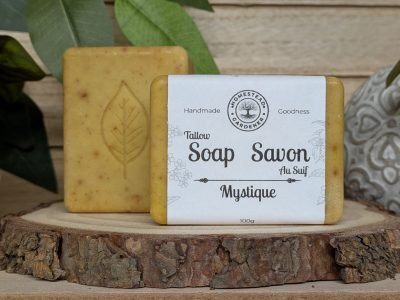
Handcrafted Tallow Soap
Our handcrafted tallow soap is infused with luxurious vanilla beans for a gentle, nourishing cleanse. Made with natural ingredients, each bar soothes, exfoliates, and leaves your skin feeling soft and refreshed. Treat your skin to the ultimate in natural care!
Septic-Safe DIY Laundry Detergent Recipe
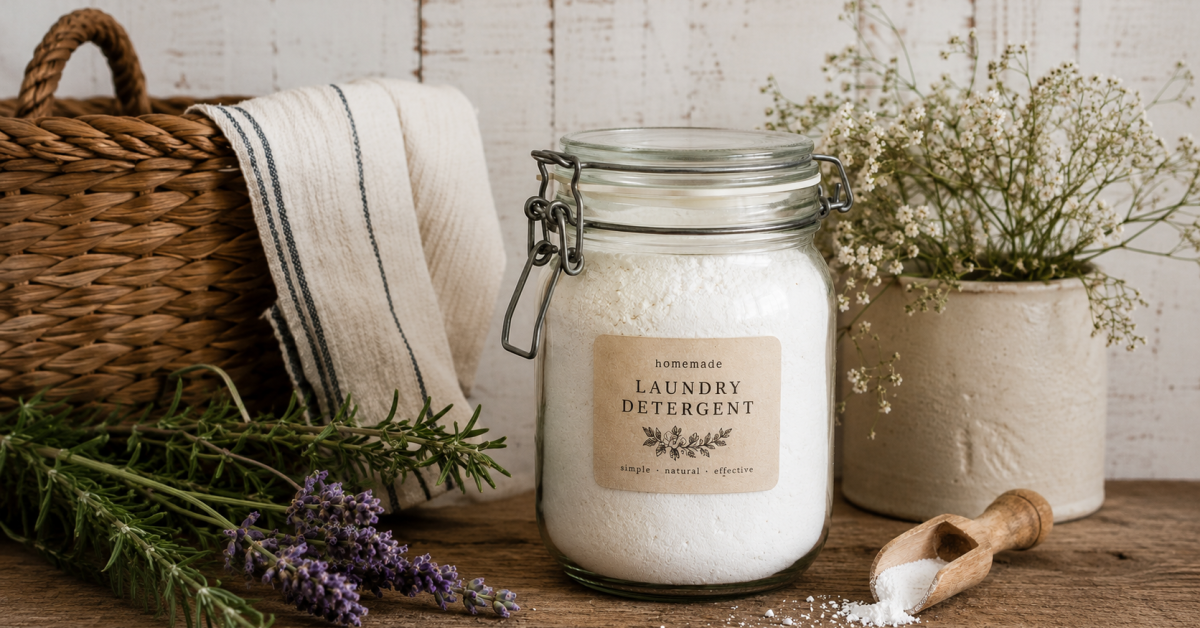
Septic-Safe DIY Powder Laundry Detergent
Equipment
- 1 Airtight Container 1/2 Gal Mason Jar Works Perfect!
Materials
- 2 Cups Washing Soda
- 1.5 Cups Baking Soda
- 1 Cup Laundry Soap Bar finely grated
- 1/2 Cup OxiClean
- 1/2 Cup White Vinegar per load, into rinse dispenser — not mixed in
Instructions
- Combine all four dry ingredients in a large bowl or directly into your storage container. Work in a dry environment.
- Stir or shake until completely and evenly combined. Break up any lumps in the granulated soap.
- Transfer to a sealed airtight container. Label with the date and store in a cool, dry place.
- Use 2 tablespoons per regular load (3 tbsp for large or heavily soiled loads). Add directly to the drum before loading clothes.
- Add ½ cup of white distilled vinegar to the fabric softener dispenser on every load.
Notes
How to Use This Detergent
Add your measured detergent directly to the drum before loading your clothes — this gives the powder the best contact with water right away and avoids it sitting dry in a dispenser drawer where moisture and steam can cause clumping.
Two tablespoons handles a regular load cleanly. If you are washing heavily soiled work clothes, muddy garden wear, or a large comforter, bump it up to three tablespoons. It is tempting to add more thinking more is better — resist that. Excess detergent leaves residue on fabric, which is exactly what causes clothes to feel stiff and look dull over time.
📌 Storage Tip
Because OxiClean contains sodium percarbonate, even small amounts of humidity will degrade its stain-fighting effectiveness over time. Use a rubber-sealed glass jar or a tight-lidded container, store away from moisture and heat, and use each batch within 2–3 months for peak performance. Shake or stir before each use as the ingredients settle.
Pro Tips for Line Drying, Stains & Hard Water
The Anti-Crunch Secret for Clothesline Drying
If your line-dried laundry comes off stiff and crunchy, the culprit is alkaline detergent residue and dissolved minerals re-depositing on fabric fibers as the water evaporates. The fix is simple and costs almost nothing: add ½ cup of plain white distilled vinegar to your fabric softener dispenser on every single load.
The vinegar neutralizes alkaline residue completely and dissolves mineral deposits before they can set into the fabric. Your clothes will not smell like vinegar once they are dry — the smell dissipates completely. This is the single most effective change you can make for soft, non-crunchy line-dried laundry.
DIY Grease & Stain Pre-Treatment
Keep a jar of dry pre-treatment paste mix next to your washing machine for cooking grease, mud, or set-in stains. Combine equal parts grated laundry soap, baking soda, and a small amount of washing soda. When needed, scoop out two tablespoons, add a few drops of hot water to make a paste, work it into the stain, let sit for 30 minutes, and wash as normal. Check the stain before drying — heat sets stains permanently.
⚠️ Stain Rule #1
Never put a stained garment in the dryer or hang it in direct sunlight until the stain is completely gone. Heat — from a dryer or the sun on a clothesline — permanently bonds grease and many other stains to fabric. Always air-dry in shade and check first.
What Does Homemade Laundry Detergent Actually Cost?
| Ingredient | Amount Used | Actual Cost |
|---|---|---|
Washing Soda |
2 Cups |
$1.25 |
Baking Soda |
1.5 Cups |
$0.50 |
Laundry Soap Bar |
1 Cup (Grated) |
$1.00 |
OxiClean |
1/2 Cup |
$1.35 |
Total per batch (~44 loads) |
$4.10 |
~$0.09
Cost per load of laundry with this DIY formula
For comparison, commercial pods typically run $0.35–$0.55 per load, and name-brand liquid detergent runs $0.30–$0.45 per load. For a household running eight loads a week, switching to this formula saves roughly $120–$150 per year.
Frequently Asked Questions
Yes. This formula is low-sudsing and completely safe for HE machines. Use 1 to 1½ tablespoons per load in HE washers rather than the standard 2 tablespoons — HE machines use less water, so they need less detergent.
Borax is a naturally occurring mineral and an effective laundry booster — but it has antibacterial properties that can harm the beneficial bacteria your septic tank relies on to break down waste. The harm is gradual rather than immediate, but with repeated weekly laundry use over months and years it is meaningful. This recipe replaces borax’s two main functions — water softening and stain fighting — with extra baking soda and OxiClean respectively, without the septic risk.
Yes, for everyday laundry. Washing soda is the same core cleaner found in many commercial detergents, and OxiClean’s oxygen-based action handles stains effectively. For very heavily soiled loads or set-in grease stains, pre-treatment with a soap paste before washing makes a significant difference. The one area commercial pods have an edge is extremely hot or cold water cycles — follow the cold-water dissolving tip in the recipe notes for best results.
Yes. OxiClean uses oxygen-based bleaching (sodium percarbonate), not chlorine bleach, making it safe on colors. As a general rule with any detergent, wash new bright or dark garments inside out on their first few washes. The vinegar rinse actually helps colors stay vibrant longer by preventing mineral buildup on fabric fibers.
Stiffness in line-dried laundry comes from alkaline detergent residue and dissolved minerals re-depositing on fabric fibers as water evaporates — it has nothing to do with the clothesline itself. The fix is to add ½ cup of plain white distilled vinegar to your fabric softener dispenser on every load. The vinegar neutralizes the residue during the rinse cycle, and your clothes will not smell like vinegar once dry. This is the single most effective change for soft, non-crunchy laundry.
Each batch makes approximately 5½ cups, yielding roughly 44 loads at 2 tablespoons per load. For a family doing 6–8 loads per week, one batch lasts about 5–7 weeks. For storage life, use within 2–3 months because the OxiClean component (sodium percarbonate) slowly loses potency when exposed to any humidity. The washing soda, baking soda, and soap remain effective indefinitely in a dry environment.
We use and love Aurora’s Linda Laundry Soap Bars because they are inexpensive, they grate nicely into a fine powder, and they are readily available for us. However, Fels-Naptha is the most popular choice and grates well into a fine powder. Zote is a softer bar available in both white and pink, widely used in laundry recipes and often sold in large economical bars. Plain castile soap bars (such as Dr. Bronner’s unscented) work well too. Whatever bar you use, grate it as finely as possible — the finer the soap, the better it dissolves and mixes into the detergent powder. A food processor or cheese grater both work.
📌 Save This Recipe for Later
Pin this to your Homestead, Cleaning, or Natural Living boards so you always have it when you need it.
Make your own septic-safe laundry detergent with just 4 natural ingredients — no borax, no harsh chemicals. Cleans clothes beautifully for only pennies per load. Includes tips for soft line-dried laundry!
#HomesteadLiving #DIYCleaning #NaturalLiving #SepticSafe
Simple Ingredients, Real Results
Switching to a septic-safe DIY laundry detergent is one of those homestead changes that feels small but compounds over time — in savings, in the health of your septic system, and in knowing exactly what is going into your wash water and your soil. There are no mystery ingredients here, no synthetic fragrances masking questionable chemistry, and no proprietary formula you have to keep buying.
Four ingredients, ten minutes, and your laundry is covered for weeks. I hope it serves your homestead as well as it serves mine.
Try It This Week
Most of these ingredients are available at any grocery or hardware store. Make a batch, hang your first load, and feel the difference that a proper vinegar rinse makes on line-dried laundry. Then come back and let me know how it went.