
Ashwagandha
Withania somnifera · Solanaceae
Also known as Indian Ginseng, Winter Cherry & Strength of the Stallion
Overview
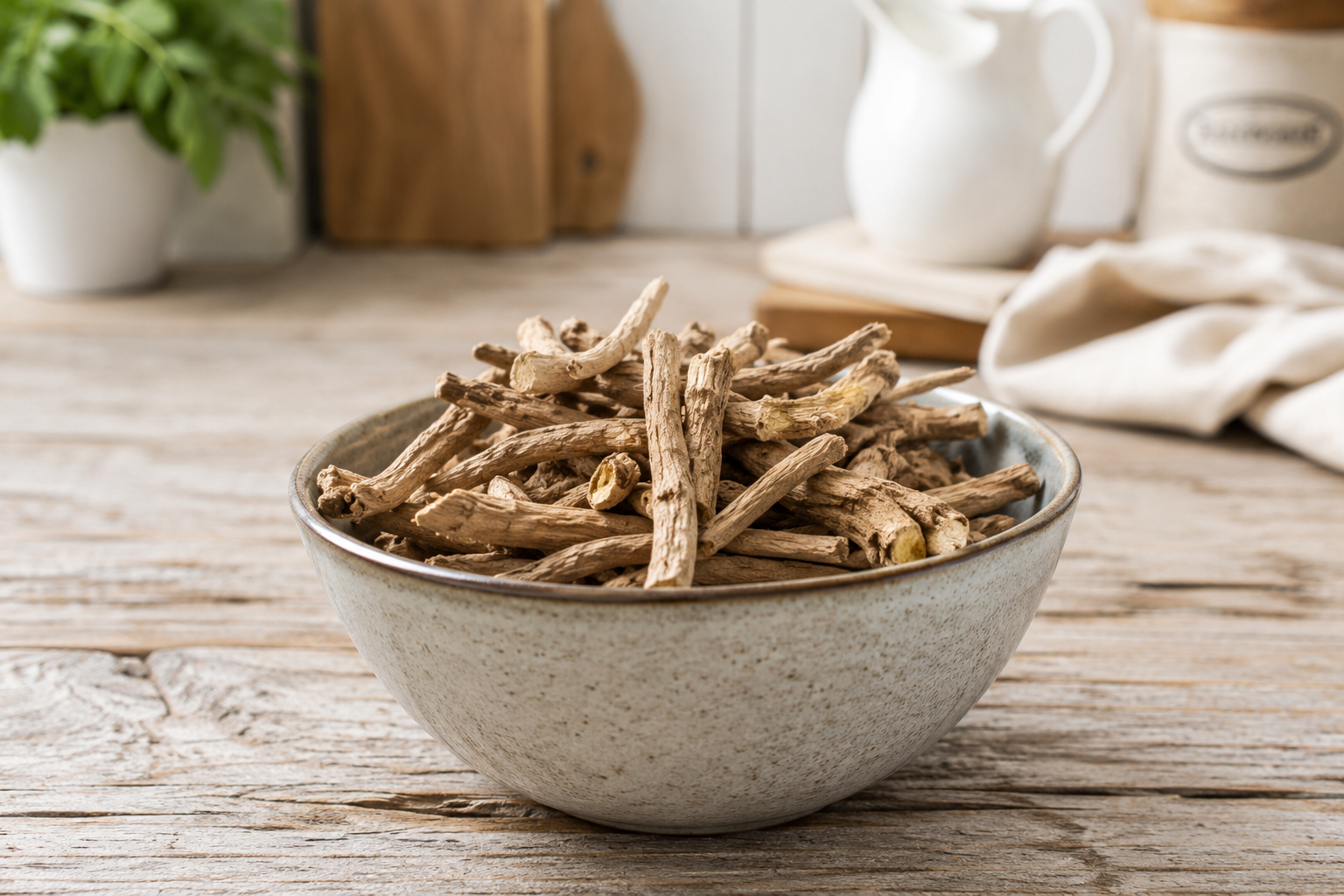
Ashwagandha, often called "Indian Ginseng" or the "Strength of the Stallion," is a cornerstone of Ayurvedic herbalism. It's renowned for its ability to strengthen the body, reduce stress, support adrenal function, and improve overall vitality.
The root is the primary part used in herbalism, with a history stretching back over 3,000 years in traditional Ayurvedic, Siddha, and Unani medicine systems.
Uses
Internal uses (primary)
- Adaptogenic support for stress & anxiety
- Nervous system tonification
- Sleep support & insomnia relief
- Immune system modulation
- Hormonal balance & reproductive support
- Anti-inflammatory & antioxidant support
- Enhances stamina & endurance
External uses
Rarely used topically — sometimes included in oils for muscle fatigue or arthritis.
What the research says
Modern clinical research has begun to substantiate traditional claims, with studies showing ashwagandha can help modulate the hypothalamic-pituitary-adrenal (HPA) axis and reduce cortisol levels. Research also points to neuroprotective, anxiolytic, and immunomodulatory effects, though most evidence points to root extract specifically rather than the whole plant in isolation.
Active Compounds
Withanolides (withaferin A, withanolide A)
Steroidal lactones considered the primary drivers of ashwagandha's adaptogenic and anti-inflammatory effects.
Alkaloids (somniferine, tropine)
Contribute to the herb's calming, sedative-adjacent properties.
Sitoindosides
Associated with anti-stress and cognitive-supportive activity in modern research.
How to Use Ashwagandha
| Preparation | Benefits | How to use |
|---|---|---|
| Powder / root | Traditional daily adaptogen support | ½–1 tsp daily, mixed with warm milk, water, or honey. Start with a lower dose and increase gradually. |
| Capsules / tablets | Convenient daily dosing | 300–600 mg, 1–2 times daily. |
| Tincture (1:5) | Fast-acting, flexible dosing | 2–4 mL, 1–3 times daily. |
| Topical (oil infusion) | Muscle fatigue, joint discomfort | Apply to sore muscles or joints as needed. |
Medication Interactions
Use caution if taking:
- Thyroid medications (may alter levels)
- Sedatives or sleep aids (enhances effects)
- Immunosuppressive drugs
- Blood pressure medications
- Blood sugar–lowering medications
Consult a qualified practitioner if you're on any prescription medications before starting ashwagandha.
Contraindications
Avoid if you:
- Are pregnant (may induce contractions)
- Are breastfeeding (insufficient safety data)
- Have autoimmune disorders, unless supervised
- Have hyperthyroidism (may increase thyroid activity)
Caution & Safety
- Start with low doses to assess tolerance
- Generally safe for most adults at recommended dosages
- Use in cycles (e.g., 6–8 weeks on, 1–2 weeks off) for long-term use
Herbal Pairings
Blends well with
- Holy Basil (Tulsi) for stress & immune support
- Licorice root for adrenal support
- Ginger or Turmeric for inflammation
- Shatavari for hormonal balance
Avoid combining with
- Potent sedative herbs in high doses without supervision
- Thyroid-active herbs if hyperthyroid
Possible Side Effects
- Mild gastrointestinal upset
- Drowsiness at high doses
- Headache or nausea in sensitive individuals
Growing & Harvesting
Growing tips
- Soil: well-drained, sandy or loamy soil
- Sunlight: full sun
- Watering: drought-tolerant once established; avoid waterlogging
- Climate: frost-tender — treat as an annual outside zones 9–11, or grow in a container that can be moved indoors
Harvesting
- Roots are typically ready for harvest 150–180 days after planting, once the plant matures and leaves begin to yellow
- Dry roots thoroughly in a cool, well-ventilated space before grinding or storing
Fun Facts & Folklore
- The name "ashwagandha" comes from Sanskrit, roughly translating to "smell of horse" — referring both to the root's distinct earthy scent and the traditional belief that it imparts the strength and vitality of a stallion.
- It's referenced in the Charaka Samhita and Sushruta Samhita, foundational texts of Ayurvedic medicine, as a rejuvenating tonic for weakness, fatigue, and neurological complaints.
- Despite the nickname "Indian Ginseng," ashwagandha is botanically unrelated to true ginseng (Panax species) — the name reflects its reputation as a vitality tonic, not a shared plant family.
Related Herbs
Grow your own apothecary — shop dried ashwagandha root for teas, tinctures, and daily tonics.
Shop Ashwagandha at Homestead GardenerNotes
Ashwagandha is a gentle yet powerful adaptogen that helps restore balance to body and mind, supporting vitality, resilience, and overall well-being.
Want this as a printable reference?
Download the full Ashwagandha herb sheet as a PDF to keep in your apothecary binder.
Download the Ashwagandha Herb Sheet (PDF)For educational purposes only. Not intended to diagnose, treat, or cure any condition. Not a substitute for professional medical advice — consult your doctor or a certified herbalist before using ashwagandha or any herb.