The DIY Hair Lie That's Wrecking Your Hair
The "clean living" hair hack that's all over Pinterest isn't gentle — it's just damage you can't see yet.
Alright, I'm finally creating a proper post about this because every single week I open up Facebook and see a new DIY shampoo recipe, and every week it seems like I'm creating a new post about why this is bad for your scalp and to please, please, please not do this to your hair!
What am I talking about? Well, if you've spent any time in the natural living or "clean beauty" corners of Facebook, Pinterest, or TikTok, you've seen it: a squeeze bottle of diluted castile soap for shampoo, followed by an apple cider vinegar rinse to "restore the pH." It's presented as the ultimate non-toxic hair hack — no sulfates, no synthetic chemicals, just two pure, simple ingredients.
I understand the instinct completely. You're trying to get harsh, stripping chemicals out of your routine, and that's a genuinely good goal. But this particular recipe isn't the gentle alternative it's marketed as. It's actively damaging your hair and scalp — and the worst part is, the damage builds slowly enough that most people blame their hair type, their water, or their genetics before they ever question the routine itself.
The recipe going around usually looks like this: 1 tbsp liquid castile soap diluted in 1 cup water, used as a "no-poo" shampoo, followed by a rinse of 1 tbsp apple cider vinegar diluted in 1–2 cups water. Simple, cheap, and everywhere in the natural living space.
The Real Problem: pH
Your hair and scalp have a natural protective acid mantle sitting somewhere between 4.5 and 5.5 on the pH scale. That slight acidity is what keeps your hair's outer cuticle — the overlapping, shingle-like layer that protects the inner cortex — lying flat and smooth.
Castile soap is a true soap, made through saponification of oils with lye. That process leaves it sitting at a pH of roughly 8.9 to 10 — significantly alkaline, not close to neutral, and nowhere near your hair's natural range.
When something that alkaline hits your hair, the cuticle scales lift and swell open, rather than lying flat. An open cuticle means more friction between hair strands, more tangling, more frizz, and a much easier path for moisture and protein to leach out of the hair shaft over time.
Why the ACV Rinse Doesn't Actually Fix It
The apple cider vinegar step exists specifically because people have noticed the alkaline soap leaves hair feeling rough — so the "fix" is to follow it with something acidic to bring the pH back down. And in the short term, it does help close the cuticle back up a bit.
But here's what it doesn't do:
- It doesn't remove soap scum. Castile soap is a true soap, which means it reacts with the minerals in hard water — calcium and magnesium — to form an insoluble, waxy residue that clings to the hair shaft. An acidic rinse doesn't dissolve this; it just sits underneath a temporarily closed cuticle, building up wash after wash.
- It doesn't replace what the soap stripped out. True soap is an aggressive cleanser with no conditioning agents, humectants, or lipids built in. Vinegar and water bring the pH down, but they don't restore the natural oils, proteins, or moisture the soap just removed.
- The repeated pH swing itself is stressful to hair. Cycling your hair between strongly alkaline and then acidic, wash after wash, is its own form of chemical stress on the cuticle — even before you factor in the soap scum sitting underneath.
What This Actually Does to Your Hair & Scalp
Visible and felt symptoms of this routine, especially over months of use:
- Dull, waxy-feeling hair that never quite feels "clean," especially in hard water areas
- Increased tangling, frizz, and difficulty detangling wet hair
- Progressive dryness and brittleness as the cuticle stays chronically stressed
- Increased breakage and split ends over time
- A dry, itchy, or irritated scalp, since the acid mantle protecting scalp skin is under the same pH stress as the hair itself
- Color-treated, chemically processed, curly, and fine or fragile hair tend to show damage faster, since they start with less cuticle integrity to spare
The frustrating part is that none of this shows up after one wash. It builds up very slowly, so by the time hair feels consistently rough or scalp irritation becomes a pattern, most people are troubleshooting everything except the actual cause, the crappy DIY recipe you've been using.
What Hair Actually Needs
Healthy hair isn't the result of one "pure" ingredient doing everything. It needs a properly balanced formula — something close to your scalp's natural pH, that cleanses without stripping, and that replaces moisture and protein rather than just removing oil. That means:
- A cleanser gentle enough to clean without disrupting the acid mantle
- Butters and oils that replenish lipids the cleansing step removes
- Proteins and humectants that support the hair shaft's actual structure
- Scalp-supportive ingredients that calm irritation rather than causing it
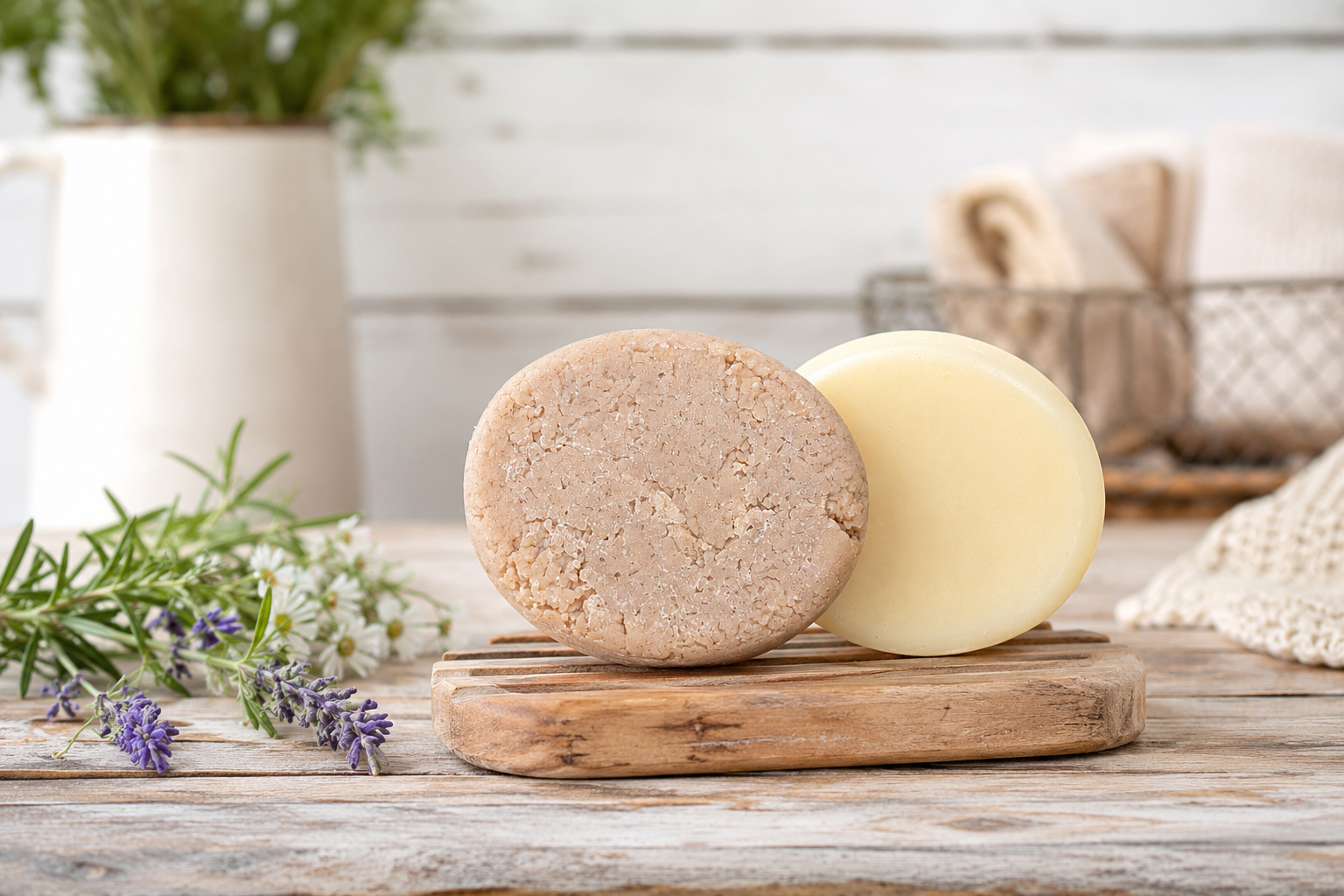
This is exactly why we formulated our shampoo and conditioner bars the way we did — not as a single "natural" ingredient standing in for an entire hair care routine, but as a real, balanced formula built for what hair and scalp actually need.
Inside Our Tallow Shampoo Bar
Unlike castile soap, our shampoo bars aren't made with true soap at all — they're built on gentle, sulfate-free syndet cleansers (SCI and coco-glucoside) that clean effectively without the high alkalinity that damages the cuticle.
SCI & Coco-Glucoside
Gentle, sulfate-free coconut-derived cleansers that lift dirt and oil without the harsh alkalinity of true soap — they clean close to your scalp's natural pH range instead of far outside it.
Grass-fed tallow, shea butter & beeswax
Replenish the lipids a cleansing step naturally removes, rather than leaving hair stripped.
Silk protein & hydrolyzed collagen
Support hair's structure directly, adding strength and shine rather than just coating the surface.
Panthenol (Pro-Vitamin B5) & aloe powder
Hydrate the scalp and help prevent the breakage that comes with dry, brittle strands.
Rosemary, cedarwood, ylang ylang & peppermint essential oils
Support scalp circulation, help balance oil production, and soothe itch and irritation.
| Full ingredient list |
|---|
| SCI, Coco-Glucoside, Tallow, Cocamidopropyl Betaine, Stearic Acid, Panthenol (Pro-Vitamin B5), Aloe Powder, Glycerin, Shea Butter, Beeswax, Silk Protein, Hydrolyzed Collagen (bovine), Water, Citric Acid, Natural Preservative |
Inside Our Tallow Conditioner Bar
Where the DIY ACV rinse tries (and fails) to patch over the damage soap causes, our conditioner bar is built with real conditioning agents designed specifically to smooth the cuticle and lock moisture in.
BTMS-25 & BTMS-50 (plant-based)
Purpose-built conditioning emulsifiers that smooth the cuticle and help detangle — this is the actual mechanism a vinegar rinse is trying to approximate, without the trade-offs.
Tallow, Cocoa butter, mango butter & shea butter
Rich, nourishing butters for dry or brittle ends.
Jojoba & argan oil
Closely mimic your scalp's natural sebum, so they absorb well without leaving an oily residue.
Hydrolyzed silk protein & collagen
Reinforce hair's structure for added softness and shine.
| Full ingredient list |
|---|
| BTMS-25 (plant-based), BTMS-50 (plant-based), Cocoa Butter, Tallow, Mango Butter, Cetyl Alcohol (plant-based), Jojoba Oil, Argan Oil, Shea Butter, Hydrolyzed Silk Protein, Hydrolyzed Collagen (bovine), Vitamin E, Natural Preservative, Essential Oils (in scented bars) |
Real formulation, not a one-ingredient hack
Give your hair and scalp what they actually need — a properly balanced cleanse and condition, made in small batches on our homestead.
The Bottom Line
Wanting fewer harsh, synthetic ingredients in your hair care routine is a good instinct — you don't have to give that up. What you do need to give up is the idea that "natural" and "true soap" are interchangeable, or that a two-ingredient hack can substitute for an actual formulated product. Your hair doesn't need to choose between clean and effective. It needs a cleanser close to its own pH, and the butters, proteins, and nutrients to back it up.
Individual hair type, porosity, and water hardness all affect how a routine performs — what works beautifully for one head of hair may need adjusting for another. This article reflects general hair science and our own formulation philosophy, not a guarantee of results for every hair type.

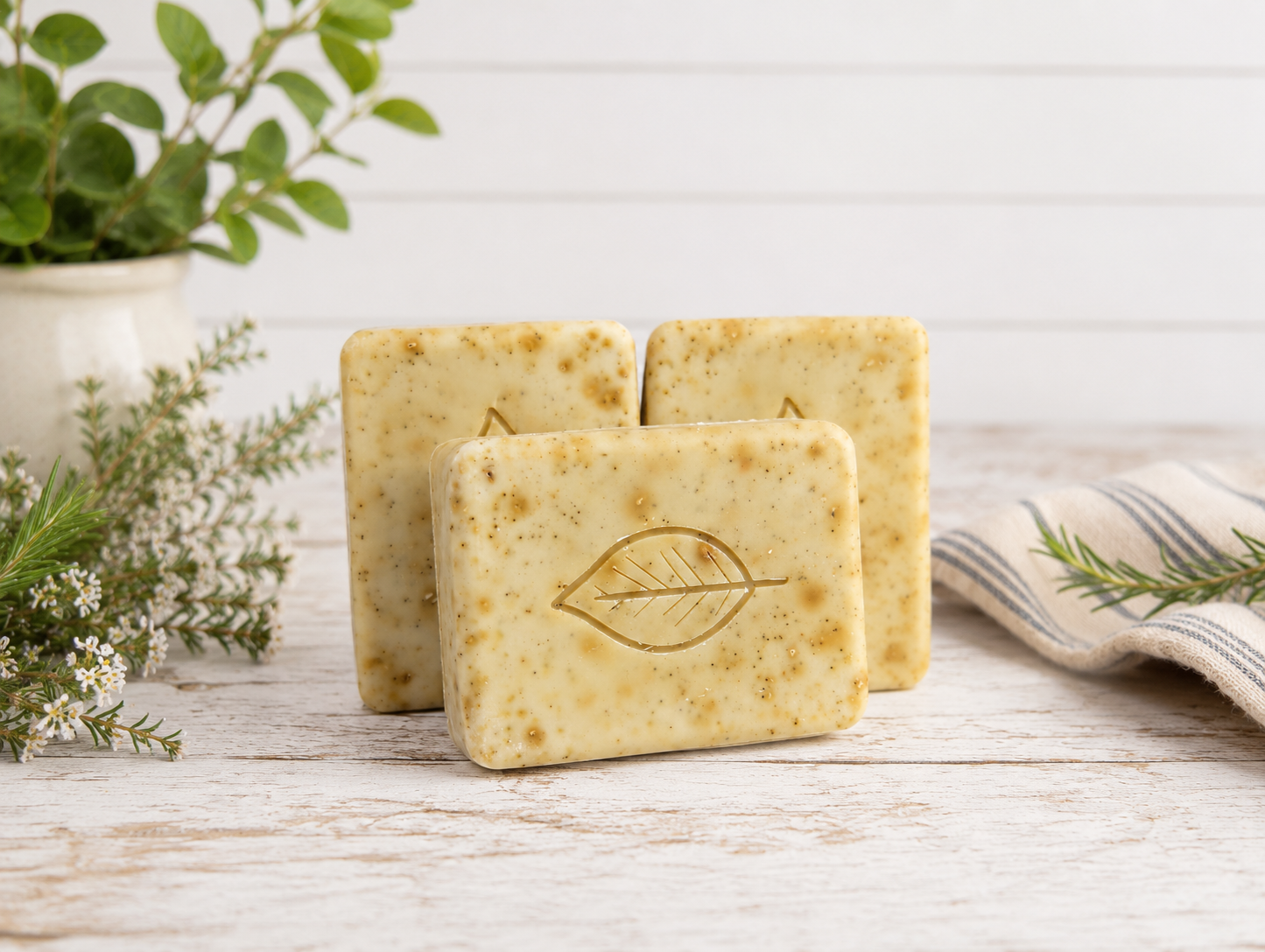
Handcrafted Tallow Soap
Infused with luxurious vanilla beans for a gentle, nourishing cleanse. Made with natural ingredients, each bar soothes, exfoliates, and leaves your skin feeling soft and refreshed.
Order Yours Today