So You Want to Make Soap? Let's Talk About It.
Everything I've learned about lye, oils, additives, and the occasional soap disaster — minus the intimidation factor everyone else adds in.
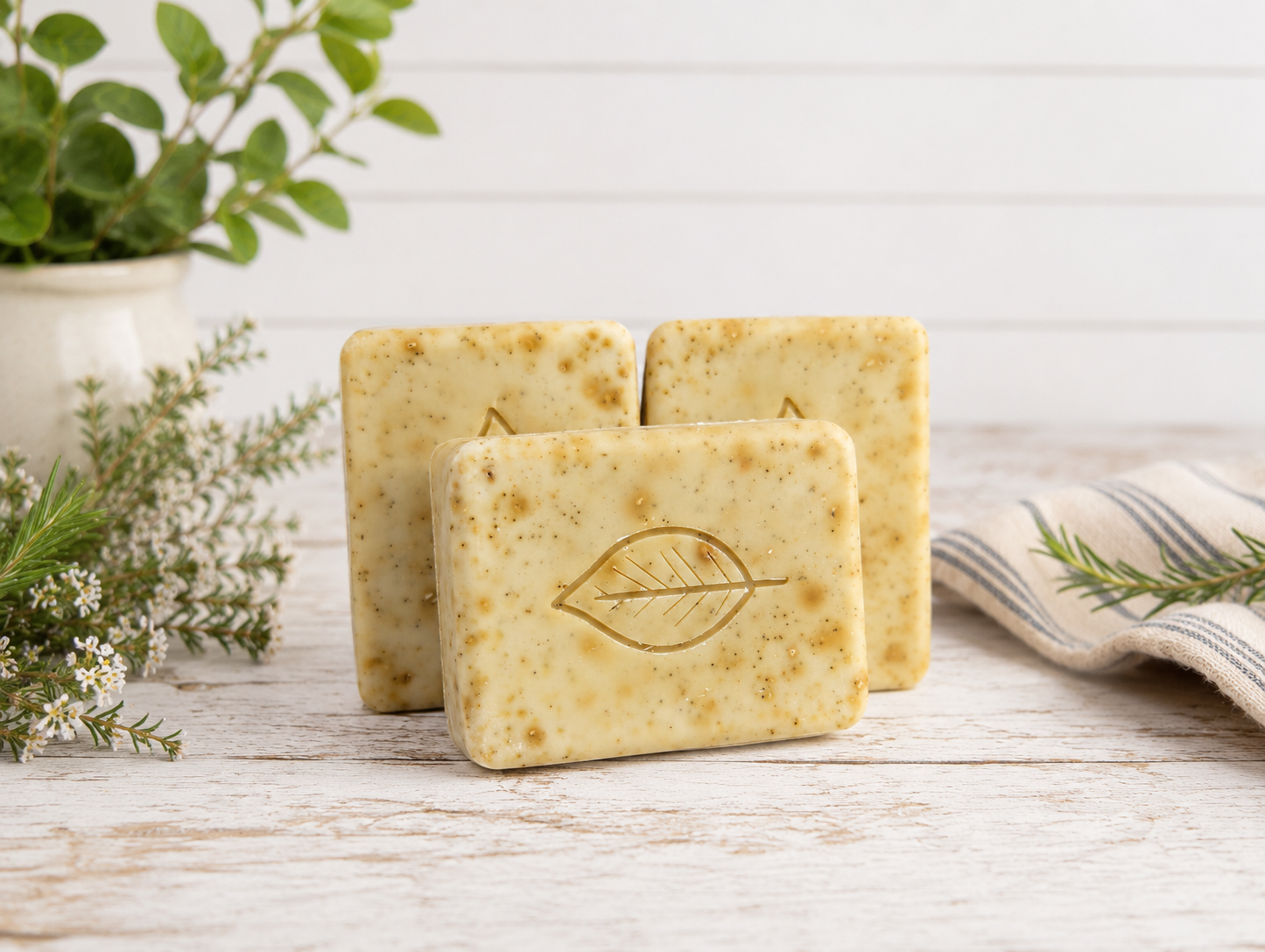
Soap making has fully taken over the homesteading world lately, and honestly? I get it. There's something deeply satisfying about pouring a pot of oil and lye water into a mold and pulling out actual, functional bars of soap a few weeks later. It feels a little bit like witchcraft, a little bit like chemistry class, and a little bit like the most productive hobby you've ever had.
But I also see a lot of soap content online that either makes it sound terrifyingly dangerous or completely oversimplifies it into "just mix stuff together!" Neither is accurate. So let's actually talk about it — the real chemistry, the real safety, the real ingredient choices, and my actual recipe, caveats and all.
Let's Talk About Lye, Because You Can't Skip It
Here's the thing nobody tells beginners clearly enough: there is no soap without lye. None. If something calls itself soap and there's no lye involved anywhere in its history, it's not actually soap in the technical sense — it's a detergent bar, or it was made with "melt and pour" base that already had the lye reaction done for you at the factory. True soap is always the result of a fat reacting with an alkali. That's just what soap is, chemically.
For the bar soap we're making here, that alkali is sodium hydroxide (NaOH) — sometimes just called "lye" or "caustic soda." There's a second type, potassium hydroxide (KOH), which is what makes liquid and soft soap instead of a firm bar. Different job, different lye. For today, we're sticking with NaOH.
Lye Safety, Real Talk
Lye is genuinely caustic — it will burn skin on contact and the fumes can irritate your lungs and eyes. This isn't fearmongering, it's just physics. But it's also completely manageable with the right habits:
- Always add lye to water, never water to lye. Say it with me. Lye into water, like snow falling into a pond. Reverse the order and you can get a violent, volcano-like reaction that erupts out of the container. This is the one rule that actually matters most.
- Wear gloves and eye protection, every single time, no exceptions because "it's just a quick batch."
- Work in a well-ventilated space — the fumes right after mixing lye into water are sharp and you don't want to be breathing them in directly.
- Never use aluminum containers or utensils. Lye reacts with aluminum and produces hydrogen gas — not what you want happening in your kitchen. Stick to stainless steel, heavy-duty plastic, glass, or ceramic.
- Keep kids and pets out of the room while you're actively working with raw lye.
Once soap has fully cured, the lye has completely reacted with the oils and there's no "raw" lye left in a properly made bar. The scary stage is entirely during the mixing process — after that, you're just waiting.
Picking Your Oils (This Is Where the Magic Happens)
Every oil and fat you add to a soap recipe brings something different to the finished bar — hardness, lather, how conditioning it feels on skin, how long it lasts in the shower. A good recipe is really a balancing act between all of these. Here's the rundown on the ones I use most:
Tallow
Adds real hardness and a stable, creamy lather. Its fatty acid profile is close to our own skin's, so it's genuinely conditioning, not just filler.
Coconut Oil
Big, bubbly lather and serious cleansing power — but too much on its own can be drying, so it's a "some, not all" kind of oil.
Goat Milk
Swapped in for some or all of the water. Adds a creamy feel and mild lactic acid benefits, but needs to be handled cold and slowly, since it can scorch and discolor if it gets too hot too fast.
Castor Oil
Used in small amounts — it's a lather-boosting powerhouse, giving you those big fluffy bubbles even at low percentages.
Avocado Oil
Rich, nourishing, and gentle — a lovely conditioning oil for sensitive or mature skin.
Jojoba Oil
Technically a liquid wax, not a true oil — closely mimics our skin's natural sebum, making it exceptionally skin-loving.
Sweet Almond Oil
Light, gentle, and conditioning, with a mild nutty richness that's easy on most skin types.
Olive Oil
The backbone of the classic "Castile" soap — deeply conditioning, but soft on its own, so it usually needs harder oils alongside it for a bar with any backbone.
Sunflower Oil
A gentle, affordable conditioning oil, often used to round out a blend rather than as the star.
No single oil does everything — that's the whole point of blending. Hard oils for structure, soft oils for conditioning, a little castor for bubbles, and you've got a genuinely balanced bar.
Pretty Doesn't Automatically Mean Healthier
I need to say this gently but firmly: those gorgeous, swirly, jewel-toned soaps all over Pinterest and Instagram are genuinely beautiful. I'm not immune to a good soap swirl either. But a soap being colorful and heavily scented doesn't automatically make it better for your skin than a plain, unscented bar — sometimes it's the opposite.
Artificial colorants and synthetic fragrance oils aren't inherently dangerous in the doom-and-gloom way some corners of the internet claim, but they also aren't doing your skin any favors. They're there for looks and scent, full stop — not for any skin benefit. If a "clean" or "natural" soap is leaning hard on saying what it doesn't have (no sulfates! no parabens!) while quietly not mentioning what it does have, that's worth a second look. Beautiful and simple aren't opposites — some of the best bars I've made are the plainest looking ones.
Essential Oils vs. Fragrance Oils
Essential oils are steam-distilled or cold-pressed straight from the plant — real botanical extracts, with the aromatic compounds nature put there. Fragrance oils are synthetically formulated to smell a certain way, sometimes designed to smell like things that don't even exist in nature (looking at you, "rain" and "cotton candy" scented soaps).
I lean toward essential oils, both because I like working with real plant material and because it fits the whole ethos of what I do here. That said, fragrance oils aren't automatically the villain — they're more consistent scent-to-scent, often more affordable, and they open up a much wider range of scents than what nature offers in essential oil form. The honest answer is: pick what aligns with your values and your nose, and just know which one you're actually using and why.
Additives: The Fun Part
This is where soap making turns from "chemistry" into genuine creativity. A few of my favorites, and what they actually bring to the bar:
Cane Sugar
Boosts and stabilizes lather — a little goes a long way toward bubblier soap.
Aloe Vera
Soothing and hydrating, a nice addition for sensitive-skin bars.
Oatmeal
Gently soothing and a mild natural exfoliant — classic for a reason.
Clays
Add color naturally and a light, mildly detoxifying feel, without a single artificial dye.
Coffee Grounds
A firm exfoliant with a lovely earthy scent — used sparingly, since too much gets scratchy fast.
Dried, Ground Herbs
Visual appeal and a whisper of their natural properties — must be fully dried, or you're inviting mold into your finished bars.
My Actual Recipe (Makes 12 x 3.5oz Bars)
I use individual bar molds, not the big loaf-and-slice method a lot of people go with — just a personal preference. Here's my loose formula:
- 1022g oils (your blend of choice from above)
- 355ml water
- 20g cane sugar
- 140g lye (sodium hydroxide)
- 2-4 tsp additives
- 51ml essential oils
Directions
Dissolve the sugar
Add the sugar to your water and stir until it's fully dissolved.
Warm your oils
Warm your oils to about 168°F. I warm mine in a stainless steel bowl, then transfer to a 2L plastic pouring container.
Mix the lye water
Add your lye to the sugar water (lye into water, always) and stir. It'll heat up on its own — let it.
Cool to matching temps
Let both the lye water and the oils cool to around 135°F, within about 10°F of each other. If one's cooling faster than the other, pop the hotter container in the fridge for 5 minutes to catch it up.
Add your additives
Stir your additives into the oils right before combining with the lye water.
Combine and blend
Pour the lye water into the oils and blend with a stick blender.
Add essential oils, blend to trace
Add your essential oils and blend until you reach trace — a thin pudding consistency, where the batter holds a faint trail when you drizzle a bit across the surface.
Pour and wait
Pour into your molds. Unmold after 24 hours, then set the bars on a drying rack to cure for 4 weeks.
Quick definition, because I promised: "trace" is the point where your soap batter has emulsified enough to start thickening — the oils and lye water are no longer separate, and the mixture holds a bit of texture when drizzled. "Acceleration" is when something in your recipe (an oil, an additive, an essential oil) speeds that thickening up faster than expected, sometimes so fast you barely have time to get it into the mold before it's more like soap-flavored concrete than a pourable batter.
A Few Honest Caveats
After years of doing this, here's what I wish someone had told me up front:
- Different oils reach trace at wildly different speeds. A batch heavy in soft oils like olive and sunflower will take its sweet time. A batch with a lot of coconut oil or butters will thicken up much faster.
- Additives affect acceleration too. Some, like finely ground clays or oatmeal, can speed things along faster than you'd expect.
- Essential oils are their own variable — more on exactly which ones below.
- There's a genuine learning curve, and that's okay. Your first few batches might seize too fast, or take forever, or come out looking a little wonky. That's not failure, that's just soap making. It's not as scary or as complicated as some corners of the internet make it sound — it just takes a few batches to get a feel for how your specific recipe behaves.
If your batter separates on you, don't panic. Every once in a while, depending on the oils in your blend, you'll be blending along and suddenly notice the mixture looking oily and separated instead of smooth — like it's splitting apart rather than coming together. It's genuinely alarming the first time it happens, but it's not a ruined batch. Just keep stick blending. It takes longer than usual, and the batter will thicken up so much that it can't separate anymore — at that point it's fully emulsified and safe to pour. Fair warning: it'll be thick enough by then that getting it into your molds neatly is a bit of a wrestling match. But salvageable? Completely.
The DON'TS (Learn From My Mistakes)
Essential oils that love to cause chaos
Clove, cinnamon (bark or leaf), bay laurel, basil, and nutmeg are all high in a compound called eugenol, which is notorious for accelerating trace and causing your batter to seize up on you fast. Ylang ylang, citronella, and palmarosa have a reputation for the same thing. If you're set on using one of these, add it early, work fast, and have your mold ready before you even think about pouring.
Oils that just don't belong in soap
Mineral oil is the big one — it's petroleum-based, not a true fat, and it simply won't saponify no matter how much lye you throw at it. It'll just sit there being greasy and useless. Stick to actual plant oils and animal fats.
Additives to skip entirely
Fresh dairy, fresh fruit, or fresh herbs (as opposed to fully dried) are an invitation for mold and spoilage in your finished bars. Glitter that isn't specifically cosmetic-grade and biodegradable can be irritating to skin and genuinely bad for waterways when it washes down the drain.
The order-of-operations mistakes I see constantly
Adding water to lye instead of lye to water — I cannot say this enough, always the other way around. Using volume measurements (cups) instead of weighing everything on a scale, which throws off your whole recipe's accuracy. And using aluminum bowls or utensils, which will react with the lye.
Not ready to make your own just yet? No shame in that — grab a bar of ours instead, made with exactly the care and real ingredients we just talked about. Fair warning: we sell them faster than we can make them, so if we're out of stock, it's not you — it's just genuinely popular soap.
Shop Our Handcrafted SoapFinal Thoughts
Soap making is part science, part art, and part "well, let's see what happens." I've had gorgeous batches and I've had batches that seized into something resembling a hockey puck. Both taught me something. If you're thinking about trying it, my honest advice is: start simple, weigh everything, respect the lye, and don't expect your first batch to be your best one. It rarely is for anybody.
This post is for educational purposes. Always follow proper safety precautions when working with lye, including protective eyewear, gloves, and adequate ventilation.