Herbal Salve Recipe for Cuts, Scrapes & Burns
The salve that lives in my kitchen drawer and by the back door, year-round.
I will just say it: I am a klutz. Between pruning shears, a wood stove, hot pans, and whatever tool I'm using that week, I am the one person on this whole property who ends up with a nicked finger or a singed wrist on a near-weekly basis. Seriously! I sliced my darn finger wide open just last weekend while sharpening our knives for our chicken cull.
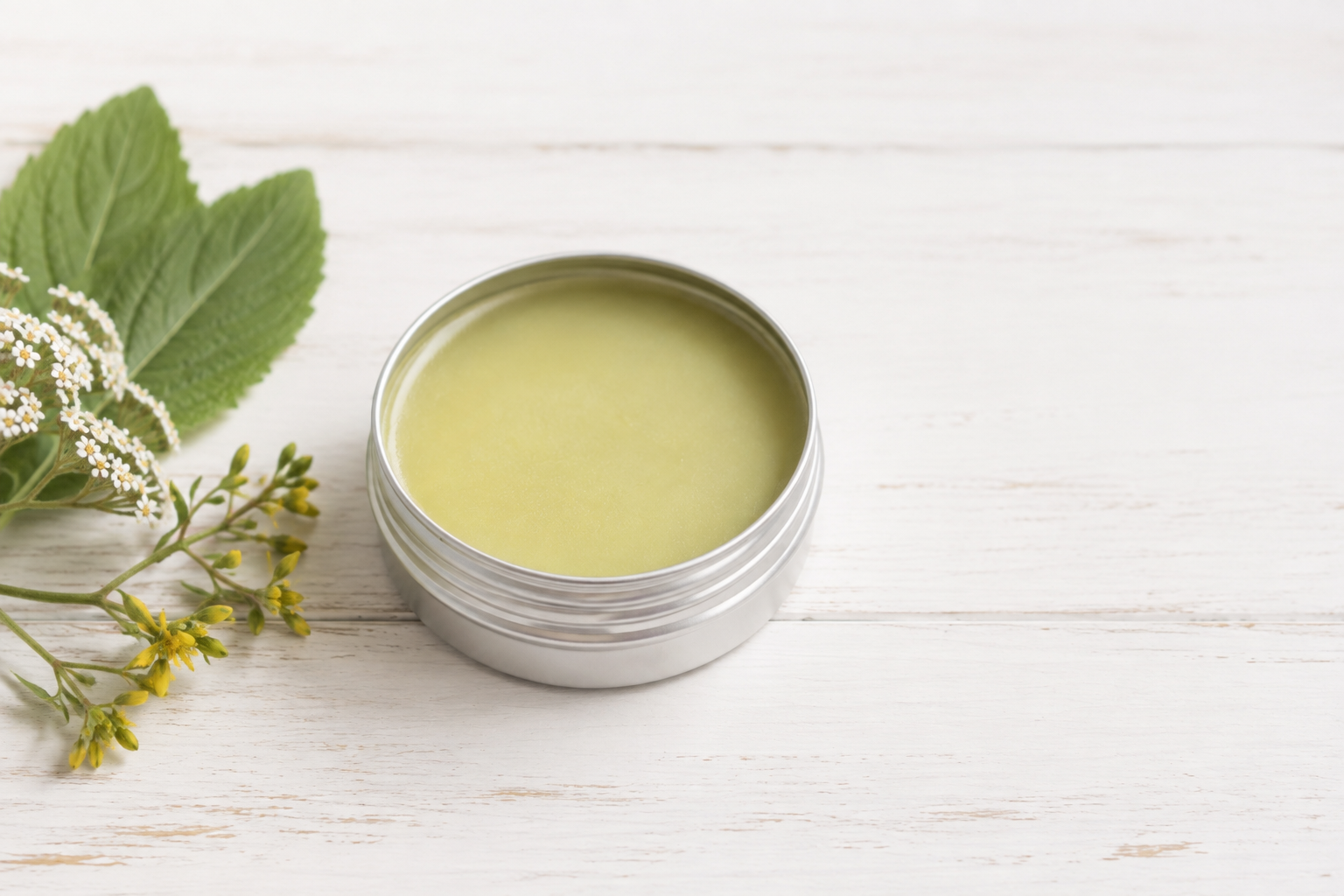
Years ago I got tired of reaching for the tube of Polysporin and started making my own herbal salve instead — same scoopable, stick-to-your-skin texture, but built entirely from herbs I actually trust. I've decided to not gatekeep my formula. So, this is that recipe, herb blend and all.
Why These Herbs
I didn't throw this blend together randomly — every herb in here is doing a job:
- Calendula is the backbone of the whole thing. Soothing, gentle, and it just plain works for skin that's trying to knit itself back together.
- Plantain is the weed growing in your lawn right now, and it's better at pulling debris out of a scrape than most people give it credit for. Cooling, too.
- St. John's Wort is my go-to for anything burn-related — it's kind to nerve tissue, which matters a lot when a burn is involved.
- Yarrow earns its spot for bleeding control, but I keep it a small percentage of the blend since too much can dry the skin out.
- Comfrey goes in last, and only a little — it closes up minor cuts fast.
One thing I'll say plainly about comfrey: it heals the surface of the skin so quickly that on a deep or dirty wound, it can seal things up before whatever's underneath is actually clean. I use it for shallow, clean scrapes and cuts, full stop — not for anything deep, jagged, or packed with dirt or gravel.
Comfrey also contains compounds called pyrrolizidine alkaloids, which is why oral use is restricted — topical use on unbroken, minor skin is the context that's actually relevant here. You can read the detail on the NIH's comfrey monograph if you want the full picture.
Herbal Salve Ingredients
I make this in two stages: a big batch of infused oil that keeps on the shelf, and then small finished-salve batches whenever a tin runs low. Saves me from starting an infusion from scratch every time I want salve.
Infused oil (big batch — makes enough for several tins): 1 cup mixed dried herb to 3 cups oil. Here's how that cup of herb splits out:
| Herb | Amount |
|---|---|
| Calendula | 5½ tbsp |
| Plantain | 4 tbsp (¼ cup) |
| St. John's Wort | 3¼ tbsp |
| Yarrow | 1½ tbsp |
| Comfrey | 1½ tbsp |
That's a full cup of herb to 3 cups of oil, which fits comfortably in a quart jar with room to shake it.
Finished salve Recipe (makes ONE 4 oz tin):
- 95 g infused oil (about 6½ tbsp) from your jar
- 10 g beeswax — this is really your consistency dial. A touch more gets you a firmer, stick-like balm; a touch less gets you something softer you'd scoop out with a finger.
- 5 g tallow or cocoa butter — this is what gives the salve that extra richness, nice for skin that's already cracked or mid-healing
- 1 ml vitamin E oil, (1-2 capsules pierced and squeezed in) — keeps the batch from going rancid
- 15–18 drops total of tea tree, lavender, and/or helichrysum essential oil
That fills one 4 oz tin right to the line.
If you don't grow or forage your own, I keep all five of these herbs stocked in our bulk herbs and spices shop — saves you the guesswork on sourcing.
Choosing Your Base Oil
I've made this with a handful of different oils over the years, and each one changes the salve a little. Here's what I've noticed:
- Olive oil is a solid, budget-friendly choice — cheap, always on hand, and it barely goes rancid, which matters when you're sitting on a big jar of infused oil for months. The trade-off is that green, grassy smell and color, which can fight a bit with your essential oils.
- Sunflower oil is my second choice — lighter feel, pale color, doesn't carry a strong scent of its own so your essential oils actually come through. If you go this route, look for high-oleic sunflower oil specifically; the regular kind doesn't hold up nearly as long on the shelf.
- Jojoba oil is technically a liquid wax, not a true oil, and it's about as close to not-going-bad as you'll find. It absorbs beautifully and feels closer to your skin's own oils than anything else on this list — but it's pricier, and because of how it's structured, it doesn't pull the plant's constituents out of the herb quite the way a true oil does.
- Sweet almond oil makes a lovely, silky salve, especially for dry or irritated skin. It just doesn't keep as long as olive, and it's a tree-nut oil — worth flagging clearly if there are allergies.
- Grapeseed oil is light and nearly scentless, but it turns rancid fast. Fine for a small batch you'll use up quickly, not something I'd tie up a big infusion in.
- Avocado oil is rich and deeply moisturizing, nice for skin that's really dry or cracked, but it's thick, slow to strain off the herbs, and the priciest of the bunch.
- The Ever-Popular Coconut oil is solid at room temperature, so it behaves a bit differently — it firms up your salve on its own, which means you can often get away with little to no beeswax. It smells faintly of coconut unless you use a refined/deodorized version, and it's not a great fit if anyone using the salve has a coconut allergy or sensitivity.
For my everyday batches, I go with almond oil — that's just what my skin likes best. But this is one of those things where you should pick what actually makes sense for your skin and your budget, not just copy what I do.
Method
Step 1: Infuse the big batch of oil. I do this one of two ways depending on how much patience I have that week:
- Slow way: herbs and oil in a quart jar, shaken daily, tucked somewhere dark for 4–6 weeks, then strained.
- Fast way: herbs and oil in a double boiler on low heat for 2–3 hours — keep it at a bare simmer, nothing hotter — then strained.
Once it's strained, that jar of infused oil keeps on the shelf until you're ready to make salve — no need to use it all at once.
Step 2: Make a tin's worth whenever you need one. Measure out 95 g of your infused oil and melt it together with the beeswax and the tallow or cocoa butter in a double boiler, stirring until it's all combined.
Pull it off the heat and let it cool down to around 40°C before you add anything else — any hotter and you'll cook the good stuff right out of your essential oils. Stir in the vitamin E and essential oils once it's cooled.
Pour into your tin and leave the lid off until it's fully set. Rushing this part with a lid on traps condensation, and nobody wants a soggy salve.
If it comes out too soft for your liking, melt it back down and add a bit more beeswax next round. Too firm, back off the wax a gram or two. It won't take you more than one batch to dial it in.
A Few Notes From the Farm
- For burns specifically, I lean harder on the St. John's Wort and lavender, and go easy on the tea tree — it can sting on burned skin, which nobody needs.
- Keep it somewhere cool and dark and it'll hold for 6–12 months depending on the oil you used. I just write the date on the lid with a Sharpie and call it done.
And if anything looks more irritated after using this than before, stop and check in with your doctor — that's just common sense, not a legal disclaimer.
Final Thoughts
This is one of those recipes that gets better the more you make it, because you start figuring out what your own skin likes. Firmer or softer, more comfrey or less — it's yours to tweak. I've been making batches of this for years now, and it's still the first thing I reach for before anything from a pharmacy shelf.
This post is for educational purposes only and isn't a substitute for professional medical advice. This salve isn't intended to diagnose, treat, cure, or prevent any disease. Seek medical attention for deep, large, or infected wounds, serious burns, or anything that isn't healing the way it should.


